Thursday, 15 August 2019

Some of the science

On our visits we try and add value to everything we do. Sometimes this can be simple things like measuring and weighing birds - proxies for fitness and condition - whilst other things can start out simple but become more difficult.
One thing we thought we had mastered from last year was determining the sex of individual birds. This year we felt we had to start all over again.

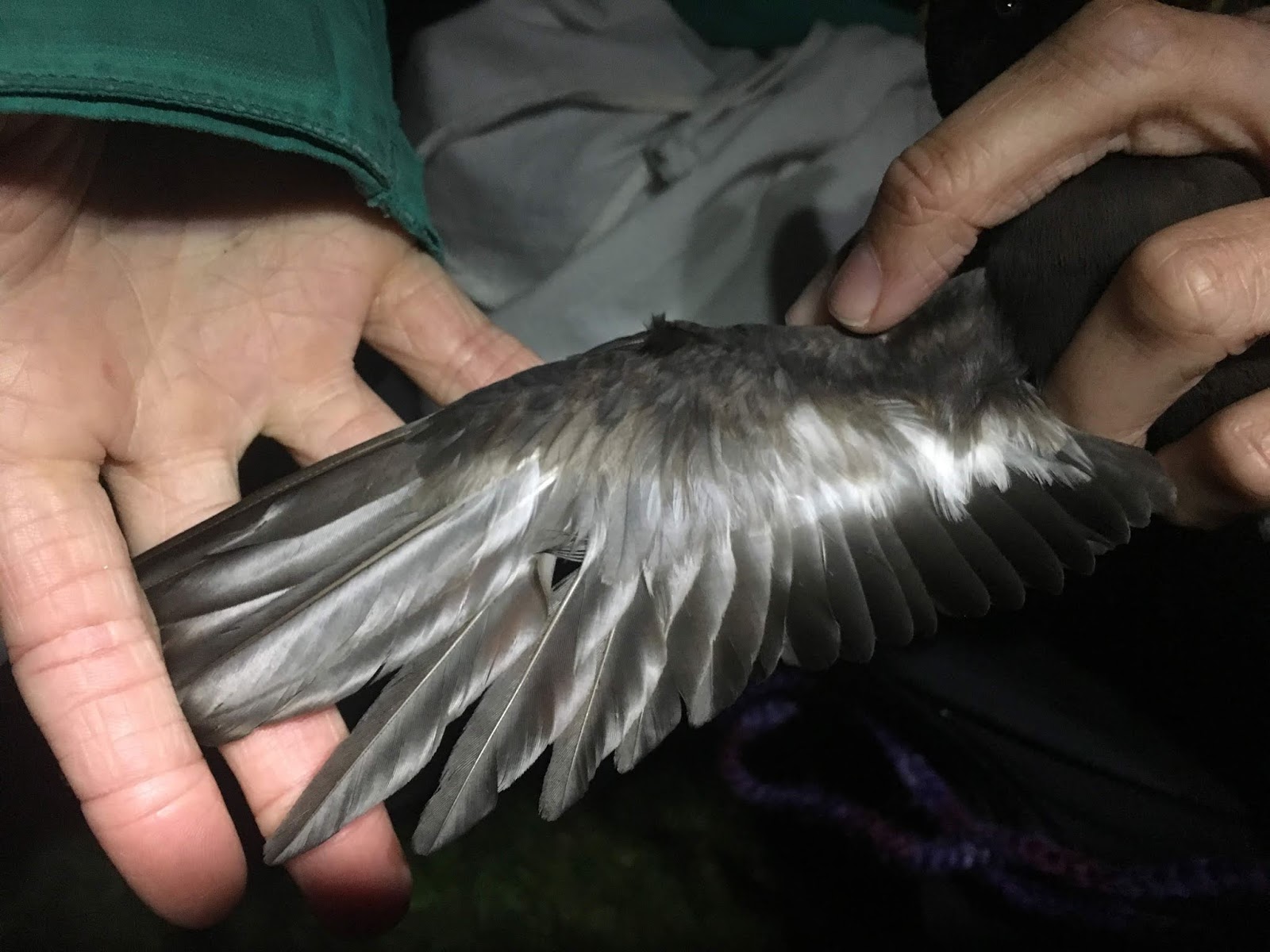
The top shows what we consider to be a male, and the bottom image a female. It all has to do with the presence and extent of white under the wing. The top image shows white all across the wing with definite fringing on the primary coverts. The bottom image still has the patch of white feathers close to the body, but is lacking the extensive white fringing.
Fine you might think, but consider the next two:


Male or female?

We decided 'this' needs more work - the reference texts didn't help much either. So, next year we intend to take more photographs and remove selected feathers for definitive sexing analysis via DNA  so we can produce guidelines for ourselves and others with regards to sexing Storm Petrels. 

Ageing them is another thing altogether.....

The 2019 season

This year a team of nine travelled and were on the island from end-July to the beginning of August (five nights in total). We pitched tents in the normal spot - next to 'old George MacKays house'. The first night of ringing we were at White Cairn (which we call 'The Maze' - no idea why; see picture) and were stopped early due to heavy rain at 1.30 am. However, we still managed to capture 79 birds.
The Maze with, if you look closely, nets set and furled ready for night time captures.

The second night we were back on The Maze and managed a full night. We caught in excess of 260 birds (same night captures are not counted in totals) with two birds carrying Portuguese rings. With the wonders of technology by mid morning of the same day we had found that one had been ringed on 22nd July 2018 and the other 21st July 2019 - 38 days previously - both near Faro in southern Portugal (definite confirmation to follow).

When not ringing Storm Petrels we go off catching Great Skua chicks - simply by walking about and looking for them.
Here two skua checks have been ringed and are now being checked for body condition  and good health.

Sometimes they can get quite large, being not short of fledging. Fortunately for them, unfortunately for us, it is usually us shredding a little blood. All this walking about over the island does have its advantages. For those who have returned it reinforces just why we come every year.


The following night we reverted to a ringing site close to the camp site as, for three of us, it was their last night (as work dictated their departure the following morning). This night we caught another Portuguese bird as well as one from Norway; besides over 240 carrying British rings.

Daylight gave rise to more skua ringing - for some there first - both for bird and ringer.


The following night we were back on The Maze - with two more Norwegian birds - and then back at the camp site for our last night.
In all we managed 1285 new ringed Storm Petrels, 124 UK retraps (birds ringed at previous visits to Nan Ron), 43 UK controls (birds ringed elsewhere in the UK, details still to come) as well as the three Portuguese ringed birds and three Norwegian.
For Great Skua we ringed nine new birds and recaptured 16 rung previously in the year.

The Team:
Steph (I love my job), Bob (fixer), Liz ('gis a job), Gerry (it's not all about the birds), Danni (alleged meteorological guru), Tom (the faint smell of lynx?).
Missing because of work Josh, James and Tony.



Wednesday, 9 January 2019

...and in British Birds Jan 2019

In July 2008 a Storm Petrel was caught bearing a Portuguese ring. One of our group, taking photographs and with time to look, noticed what he thought was a deeper 'thicker' bill than was usual for Hydrobates pelagicus pelagicus (nominate race). It was considered it might be a H.p. melitensis - the Mediterranean form of Storm Petrel. With due diligence and reference to others more knowledgeable in the field, plus the fact that this bird had been ringed by Rob Thomas of Cardiff University on 7 July 2007 at Ponta de Almadena, and had had samples taken for DNA, subsequent analysis was able to show it was pelagicus.
Adding melitensis to the British list was not to be, bad luck Stephen, but what this article did demonstrate was the difficulty in identification that remains for this species - even the deepest-billed birds may not (necessarily) be melitensis. 

...one from Treshnish

2628978
Ringed on ENR 28.07.2014 Recpatured Treshnish Isles 28.06.2018  1431days 262km 209deg

Wednesday, 2 January 2019

GB recoveries (1)

All of these individuals were originally caught and ringed by us and then recaptured by someone else.

The first two were caught by us on Nan Ron in July 2017 and were both recaught the same day in 2018 on Birsay, Orkney by the Orkney RG, 361 miles away.
2716944 Caught 24.07.2018. Captured Birsay 20.08.2018
2726653 Caught 25.07.2017. Captured Birsay 20.08.2018


The following were caught over various years on Nan Ron but were then all recaught by Scott (on Nan Ron) this year. Ring number followed by year of ringing.

2611976 (2008)
2629461 (2009)
2658454 (2010)
2659592 (2011)
2682205 (2013)
2682974, 2696979 (2014)
2716007, 2716291, 2716129, 2717031 (2015)
2716932, 2716897, 2716798, 2726501, 2726747, 2726656, 2716766 (2017)

2018 catch-up

I don't have final figures yet for 2018 as I'm still waiting to find out whether some of the birds we caught were either retraps or controls but we will be looking at about 740 new birds ringed.
I do however have some recovery data on those records submitted to date.
Firstly, this post, three late reported Norwegian recoveries.

8E29782
Caught 24.08.2013 Flem, More og Romsdal, Norway
Captured 27.07.2014 ENR
337days 736km 232deg

8E29909 (second ring added 2700571)
Caught 25.08.2013 Flem, More og Romsdal, Norway
Captured 30.07.2014 and 01.08.2014 ENR
341days 736km 232deg

ED00253
Caught 24.08.2013 Hamnaholmen, More og Romsdal, Norway
Captured 31.07.2014 ENR
341days 674km 233deg

Sunday, 2 September 2018

2018's visit (3)

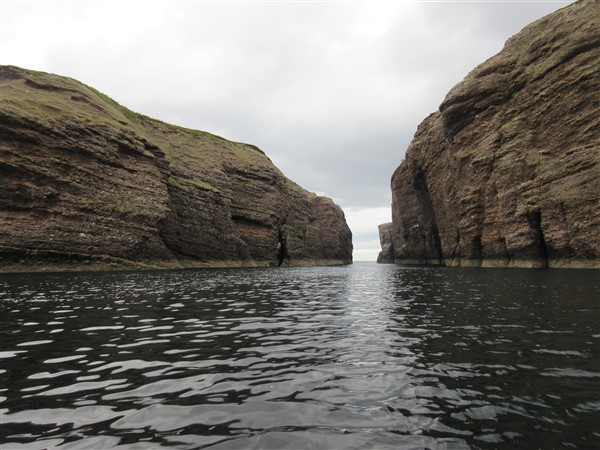
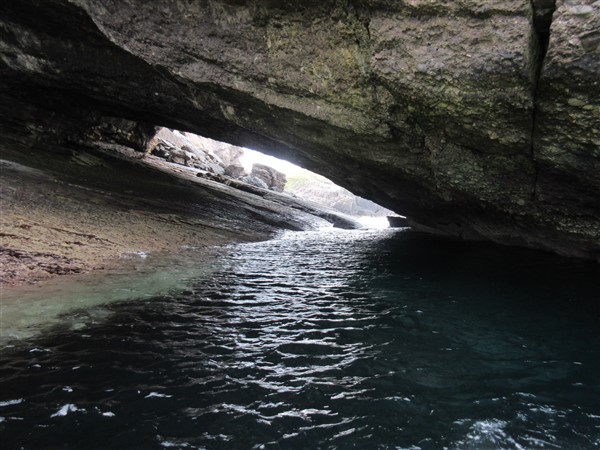
The Round Island Trip.

Every year we see the island from our point of access and then 'from the top'. Only rarely do we view it from the sea. Occasionally Jean or Andy come and take us around - we just have to ask. Here are some photos from this year's circular. There are no comments to the pictures - you either like islands or you dont.