All of these individuals were originally caught and ringed by us and then recaptured by someone else.
The first two were caught by us on Nan Ron in July 2017 and were both recaught the same day in 2018 on Birsay, Orkney by the Orkney RG, 361 miles away.
2716944 Caught 24.07.2018. Captured Birsay 20.08.2018
2726653 Caught 25.07.2017. Captured Birsay 20.08.2018
The following were caught over various years on Nan Ron but were then all recaught by Scott (on Nan Ron) this year. Ring number followed by year of ringing.
2611976 (2008)
2629461 (2009)
2658454 (2010)
2659592 (2011)
2682205 (2013)
2682974, 2696979 (2014)
2716007, 2716291, 2716129, 2717031 (2015)
2716932, 2716897, 2716798, 2726501, 2726747, 2726656, 2716766 (2017)
Wednesday, 2 January 2019

2018 catch-up
I don't have final figures yet for 2018 as I'm still waiting to find out whether some of the birds we caught were either retraps or controls but we will be looking at about 740 new birds ringed.
I do however have some recovery data on those records submitted to date.
Firstly, this post, three late reported Norwegian recoveries.
8E29782
Caught 24.08.2013 Flem, More og Romsdal, Norway
Captured 27.07.2014 ENR
337days 736km 232deg
8E29909 (second ring added 2700571)
Caught 25.08.2013 Flem, More og Romsdal, Norway
Captured 30.07.2014 and 01.08.2014 ENR
341days 736km 232deg
ED00253
Caught 24.08.2013 Hamnaholmen, More og Romsdal, Norway
Captured 31.07.2014 ENR
341days 674km 233deg
I do however have some recovery data on those records submitted to date.
Firstly, this post, three late reported Norwegian recoveries.
8E29782
Caught 24.08.2013 Flem, More og Romsdal, Norway
Captured 27.07.2014 ENR
337days 736km 232deg
8E29909 (second ring added 2700571)
Caught 25.08.2013 Flem, More og Romsdal, Norway
Captured 30.07.2014 and 01.08.2014 ENR
341days 736km 232deg
ED00253
Caught 24.08.2013 Hamnaholmen, More og Romsdal, Norway
Captured 31.07.2014 ENR
341days 674km 233deg
Sunday, 2 September 2018
2018's visit (3)
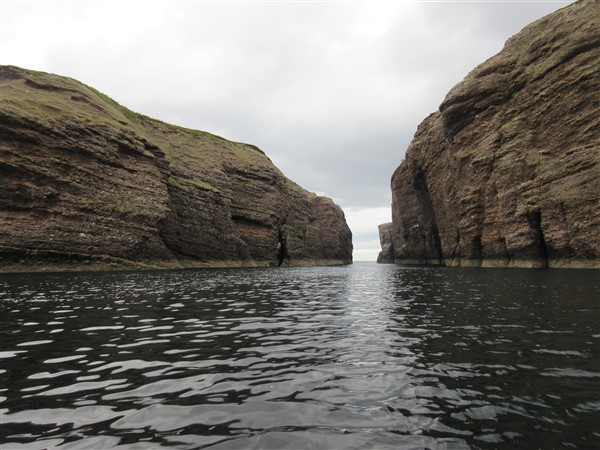
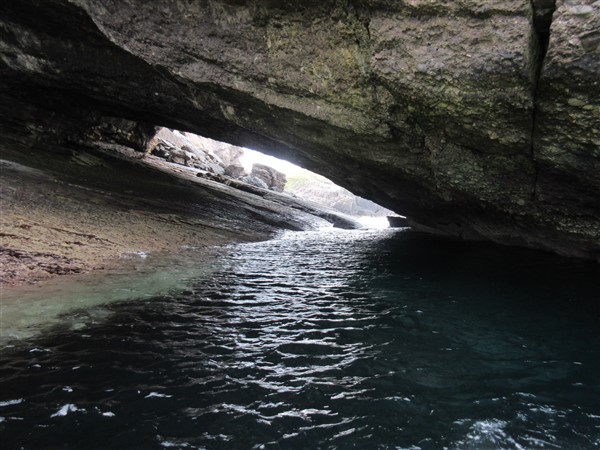
The Round Island Trip.
Every year we see the island from our point of access and then 'from the top'. Only rarely do we view it from the sea. Occasionally Jean or Andy come and take us around - we just have to ask. Here are some photos from this year's circular. There are no comments to the pictures - you either like islands or you dont.


Every year we see the island from our point of access and then 'from the top'. Only rarely do we view it from the sea. Occasionally Jean or Andy come and take us around - we just have to ask. Here are some photos from this year's circular. There are no comments to the pictures - you either like islands or you dont.





2018's visit (2)
On a birding front we also take note of everything else we see (submitted to Birdtrack). We keep a daily birding log to which, this year, we added butterflies and bees - because there were so many on the island. Non of us are botanists so the flowers and grasses tend to remain much of a mystery.
Two of the additional things we do are: to ring everything we can - mainly bonxies (chicks and adults) and to census the island for breeding birds, especially fulmars.
With bonxies we either ring chicks - find them, catch them and ring them (they are fairly harmless and completely flightless) and any adults we can lure in to the fish-baited spring trap aka 'the fireguard'. Catching adults and/or free-flying juveniles is a whole different ball game.


Two of the additional things we do are: to ring everything we can - mainly bonxies (chicks and adults) and to census the island for breeding birds, especially fulmars.
With bonxies we either ring chicks - find them, catch them and ring them (they are fairly harmless and completely flightless) and any adults we can lure in to the fish-baited spring trap aka 'the fireguard'. Catching adults and/or free-flying juveniles is a whole different ball game.

Setting the fireguard on a lookout post

A flying juvenile bonxie up close

The mouth that can swallow a puffing whole.

Phil got his new species for ringing, with a bit of a love-bite as a reminder.
This five days later with the bite occurring through four layers of clothes.
Undertaking a census of the fulmars is typically done from land looking /viewing all of the cliffs /ledges as possible and noting the, by now, numbers of chicks.


The island derived walk counted 48 fulmar nets - an increase on last year. However, Andy and Lexie came back one day and took us on a full at-sea circumnavigation of the island. This added another.....70 nests. So a very good year for fulmars.
We also undertake some fishing:

Some whale watching:

This a basking shark, not my image (WalesOnLine.com) although our view was similar to this, and some birdwatching:

A sub-adult white-tailed was roosting locally, and we managed to view it almost daily. Again, not my photo (kilda.org.uk) shows a similar view. Bonxie, left, barn door, right.
Lastly for this section. On the island this year we found:

This was a 'rock' painted and decorated by pupils from Farr Primary School and Nursery at Bettyhill. We adopted it and now it will be placed somewhere else for someone to find.
And the very last. Working at night presents opportunities for star-gazing, satellite watching, space-station and solar flare watching. This year we were also treated to:

2018's visit (1)
This year, due to a number of circumstances, only a small team were able to make our annual visit. The final team numbered five, but all were A-permit holders so everyone was able to perform every job giving us the greatest flexibility.
Andy and Lexy took us over in the boat and 'dropped' us just on high tide - so high that we had to wait before we could get on to the island proper.


Although our visit was slightly later than we would normally have gone we were surprised that a few Great Skua /Bonxie chicks were about - big enough for ringing.


Andy and Lexy took us over in the boat and 'dropped' us just on high tide - so high that we had to wait before we could get on to the island proper.

This is us all waiting on a small outcrop of rock with part of the week's supplies.
At some point we decided that a 'climb' was in order to go off and pitch our tents; and then go back for the rest of the gear later. Congrats to Allan who mastered his height anxiety.
It was good to be back on the island - the old houses were still all present and accounted for (although a little more dilapidated with each passing winter) and the sheep were all looking reasonably healthy. The island was 'dry' but the vegetation did not appear to be suffering that much.

After pitching tents, eating, and possibly a little sleeping, we went off to The Maze to pitch nets ready for the night. For those in the know, yes, they were furled in-between times.

Here we are erecting one of the two independently set 60-footers.
The islands' natural arch behind. Next stop Arctic!

This one a new species for Phil.
Although the trip is mainly about ringing Storm Petrels it is not at the expense of enjoying being on the island - with all worries left at Skerrag. Phil was new to the island so there was the delightful task of introducing him to it.

The old homesteads - all of them - with their brick and wood structures, foundation stones, dressed guttering stones, wallpaper(!) and, with one, the evidence of a flushing toilet.


The views, here across to Neave Island and the mainland (upper) and, lower, An Innis, right, Cladhan-na h-Innis (channel) and Nan Ron, left, with the mainland beyond.
The island itself:


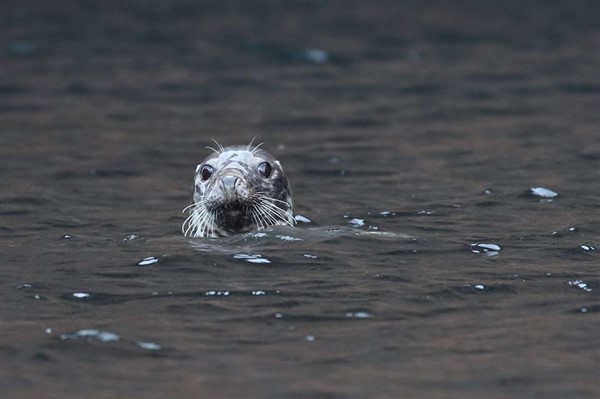
And then some of the other flora and fauna (of which this is a mere snapshot).


Monday, 6 August 2018
...this new computer system is good?
Another recovery, this time from the Isle of Man for a bird recaptured only 3 weeks ago.
2726767
ENR 26.07.2017
Calf of Man, IoM 14.07.2018 353days 501km 184deg
2726767
ENR 26.07.2017
Calf of Man, IoM 14.07.2018 353days 501km 184deg
Friday, 3 August 2018
Early recoveries from 2018
As we get ready for our annual visit - only a week to go - a small batch of recoveries have come in.
Stefan managed a couple of days in early July on ENR and caught five of our previously ringed birds:
from 2016 birds 2716500 and 2716744 (700 and 701 days between ringing and recapture)
from 2017 birds 2716966, 2726860 and 2726875 (all around 350 days since first ringing).
Besides these we had four recoveries courtesy of Hugh from Priest Island - all recaught on the 17 July 2018. All of these were much older birds and caught without tape lure at a breeding colony. One wonders if this is where ENR ringed birds predominantly breed.
2659833 ringed 23.07.2012 2155 days 97km 227deg
2696871 ringed 29.07.2014 1419 days
2700973 ringed 10.08.2015 1042 days
2716054 ringed 12.08.2015 1040 days
Stefan managed a couple of days in early July on ENR and caught five of our previously ringed birds:
from 2016 birds 2716500 and 2716744 (700 and 701 days between ringing and recapture)
from 2017 birds 2716966, 2726860 and 2726875 (all around 350 days since first ringing).
Besides these we had four recoveries courtesy of Hugh from Priest Island - all recaught on the 17 July 2018. All of these were much older birds and caught without tape lure at a breeding colony. One wonders if this is where ENR ringed birds predominantly breed.
2659833 ringed 23.07.2012 2155 days 97km 227deg
2696871 ringed 29.07.2014 1419 days
2700973 ringed 10.08.2015 1042 days
2716054 ringed 12.08.2015 1040 days
Subscribe to:
Posts (Atom)

